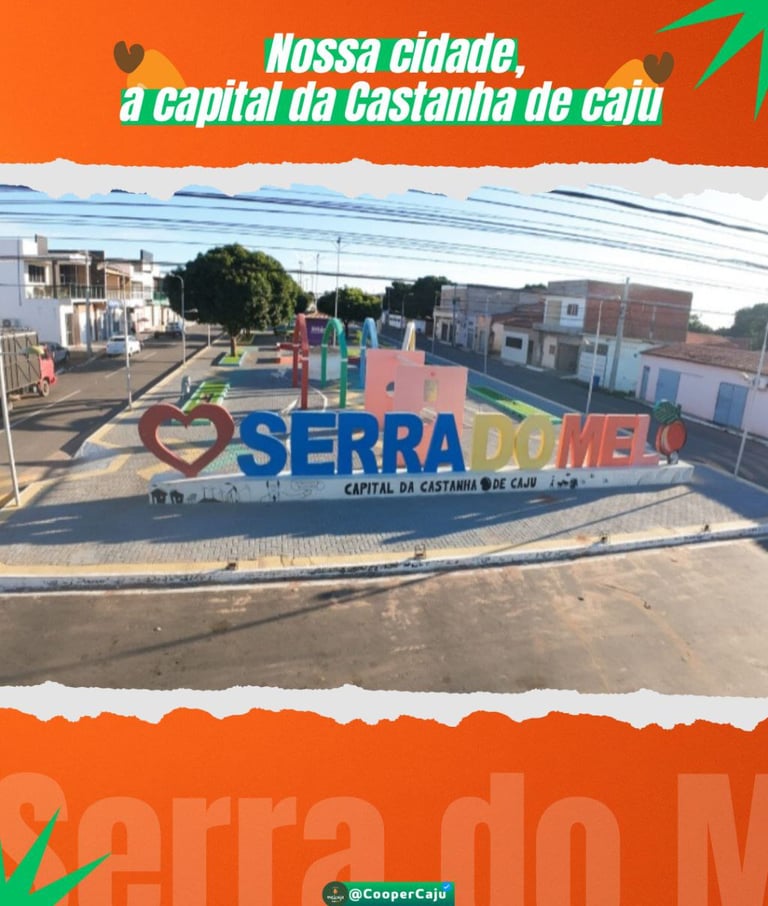



Serra do Mel
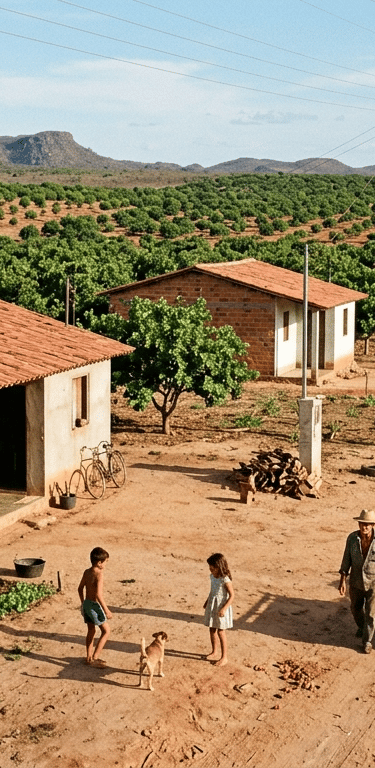
The history of Serra do Mel, in Rio Grande do Norte, represents one of Brazil’s most unique and organized colonization and land reform projects. Conceived in the 1970s under the administration of Governor Cortez Pereira, the municipality differs from spontaneous settlements. It was designed with rigorous and symmetrical urban planning, consisting of a central administrative village (Vila Central) surrounded by twenty-two rural villages, each named after a Brazilian state. This model was structured to transform an area of sandy soil and low population density into a productive hub focused on cashew farming. Each settler received a plot of land with the mission to cultivate cashew trees, creating a solid and standardized economic foundation for the entire region.
Our Contribution
In this scenario, the cooperative emerged as a fundamental pillar to ensure the survival and prosperity of local producers, acting as the beating heart that connects rural villages to the consumer market. From the beginning, the cooperative organization was essential to overcoming the settlers' isolation, allowing the processing and marketing of cashew nuts to be carried out collectively and professionally. By centralizing production, the cooperative eliminated excessive dependence on middlemen and ensured that the product's added value remained in Serra do Mel itself, financing the infrastructure of processing units and providing the necessary technical support for plantation management.